
Why the recommendations matter, practical tips for tired parents, and help finding resources.

It is the middle of the night. Your baby has finally fallen asleep in your arms, and you are wondering whether putting them down will mean starting all over again.
Safe sleep advice has to work in moments like these. Families need more than a list of rules. They need to understand why those rules matter, have a plan for exhaustion, and have access to a safe place for their baby to sleep.
At Build a Brain, we believe supporting a baby’s development includes supporting the people caring for them. Start with this: for every nap and every night, place your baby on their back in their own firm, flat, level sleep space. These recommendations apply throughout the first year. Safe sleep reduces risk; it cannot guarantee that a tragedy will never happen. Families who have experienced a loss deserve compassion and support, never blame.
The ABCs and the reasons behind them
Alone means a separate sleep space with you nearby
Your baby can sleep close to you in a crib, bassinet, or play yard in your room. Room sharing is recommended for at least the first six months. It keeps feeding and comforting within reach while avoiding hazards from sharing an adult sleep surface.
Why it matters: Adult mattresses, bedding, other people, and pets can obstruct a baby’s breathing or create places where a baby becomes trapped. A separate sleep space protects your baby while keeping you close.
Try this tonight: Put the bassinet or play yard near your bed. After feeding or comforting, return your baby to it before you go to sleep. Alone does not mean ignoring your baby’s needs.
Back means every sleep even with reflux
Start every sleep with your baby on their back. Side sleeping is unstable because a baby can roll onto their stomach.
Why it matters: Back sleeping lowers SIDS risk. Healthy babies have airway anatomy and protective reflexes that help them swallow or cough up spit-up. Back sleeping does not increase choking risk, including for babies with reflux. Raising the mattress or using a wedge is not the solution.
Try this tonight: If spit-up worries you, talk with your pediatrician about feeding and reflux while keeping the sleep surface flat. When your baby can roll both ways independently, keep starting sleep on their back, but you do not need to repeatedly turn them back. Stop swaddling at the first signs of trying to roll.
Crib also includes a suitable bassinet or play yard
A traditional wooden crib is not the only acceptable option. A portable crib or play yard that meets federal safety standards, is assembled correctly, and is used within its manufacturer’s limits can provide a safe sleep space.
Why it matters: Soft surfaces can mold around a baby’s face. Inclined surfaces can let their body slide and their head slump, interfering with breathing.
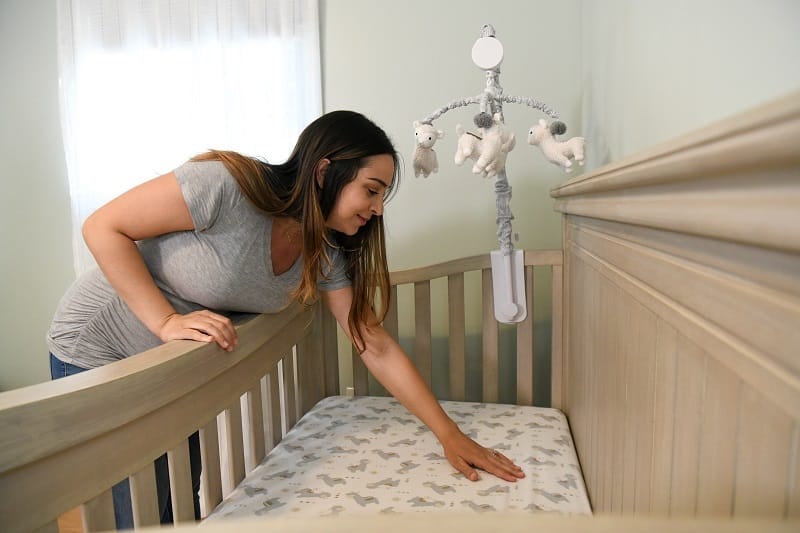
Try this tonight: Use the mattress supplied with your play yard, secured as instructed, with only a properly fitted sheet. Do not add a second mattress, foam topper, pillows, or folded blankets to make it softer. Extra padding can create dangerous gaps and entrapment hazards.
Keep warmth on your baby rather than in the crib
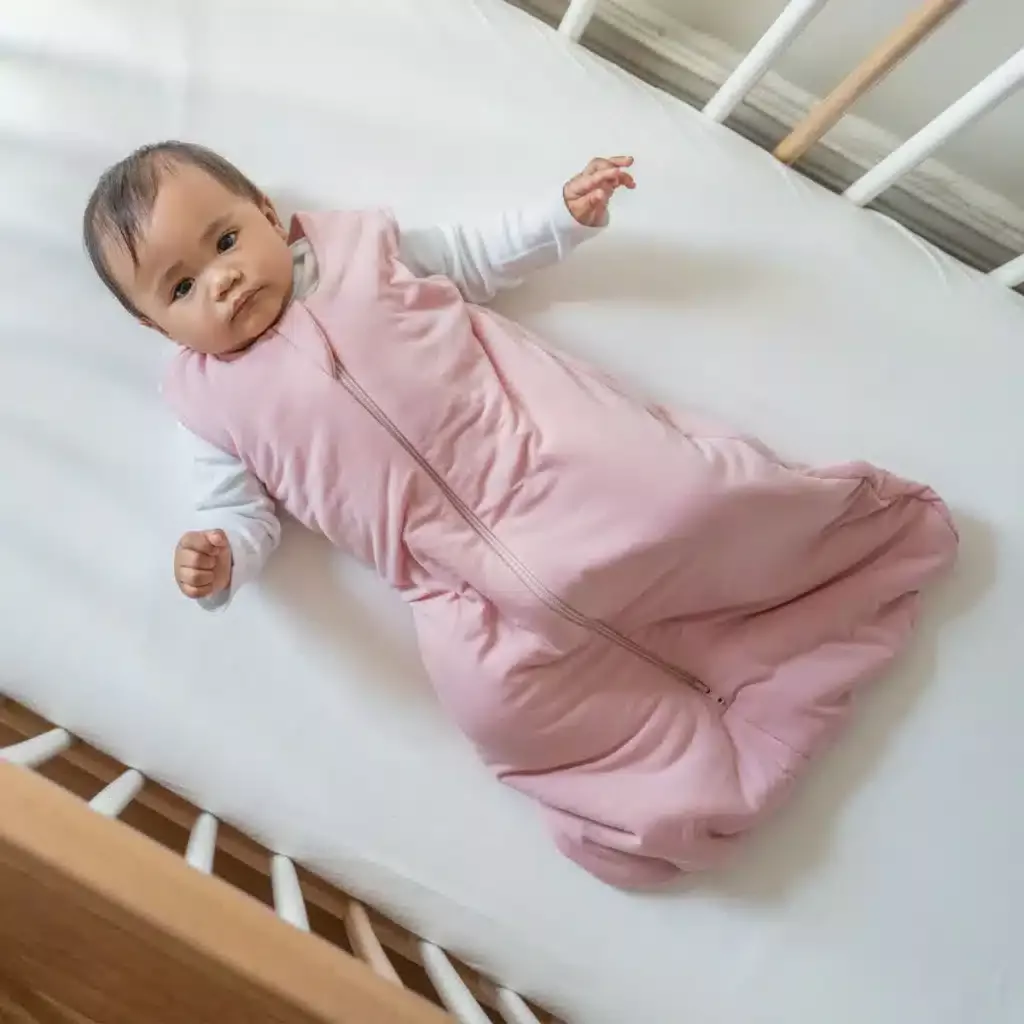
An empty sleep space may look less cozy to adults, but loose blankets, pillows, bumpers, and stuffed toys can cover a baby’s nose and mouth. Choose suitable sleep clothing or a properly fitted, nonweighted wearable blanket instead. Skip indoor hats and watch for sweating, flushed skin, or a hot chest. Overheating increases risk. Weighted blankets and sleepers are not recommended for infants.
As the National Institutes of Health’s Safe to Sleep program explains:
“No product can prevent SIDS.”
A monitor, a product’s marketing claim, or a more expensive nursery setup cannot replace a safe sleep environment.
Make a plan for the exhausted moments
Contact naps and nighttime feeds can leave parents struggling to stay awake. Plan for that before you are overwhelmed.
- Ask for specific help. Try: “Can you stay with me during this feed and help put the baby back afterward?”
- Avoid feeding on a sofa or recliner when you might doze. Babies can become trapped against cushions or an adult’s body.
- Prepare for accidental dozing. If you bring your baby into your bed to feed or comfort, clear pillows, blankets, and other soft bedding from the area beforehand. This reduces some hazards if you accidentally fall asleep; it does not make bed sharing safe.
- Return your baby to their own sleep space. Do this after feeding, or immediately when you wake if you accidentally fell asleep.
If your baby falls asleep in a swing or car seat, move them to their safe sleep space as soon as possible; for car travel, do this once you are out of the vehicle. A sitting device is not a routine nap space.
Need a free crib or play yard? Start here.
You deserve practical help if buying a safe sleep space is out of reach.
Cribs for Kids describes its mission as:
“providing portable cribs to families who, otherwise, cannot afford a safe place for their babies to sleep.”
1. Search the national Cribs for Kids Find a Crib locator. Enter your ZIP code and contact nearby partners. Many provide free portable cribs to eligible families. Requirements and supplies vary; some partners provide education only. Ask about financial eligibility, infant age, required safe sleep education, and pickup or delivery. [8]
2. Call 211 or visit 211.org. Ask for local free crib, portable crib, or Pack ‘n Play assistance. This is a referral service, so ask which programs are currently accepting requests. [9]
3. Ask your hospital, pediatric office, or local health department. Cribs for Kids recommends these contacts, along with Healthy Start programs, when a nearby partner cannot help. If you are pregnant, ask before delivery so there is time to arrange assistance.
For Escambia County families: Escambia County Healthy Start lists a Cribs for Kids Safe Sleep Initiative. Call 850-696-2291 to ask about current assistance and eligibility. Availability of a free crib must be confirmed directly. [10]
Here is a simple call script:
“I need a separate safe sleep space for my baby and cannot afford one. Do you provide a free portable crib or play yard? What are the requirements, and how soon could I receive it? If you cannot help, who should I call next?”
If you need somewhere safe tonight, say so at the start of the call and ask for an urgent referral.
Watch together
Watch 12 Steps for Safe Sleep from Cribs for Kids, featured in the Safe Sleep Academy video library. Share it with grandparents, babysitters, and anyone else caring for your baby. The library also includes Spanish language videos and Cribette assembly demonstrations. [11]
After watching, ask: “Where will our baby sleep, and what will we do when the person caring for them is too tired to stay awake?”
Going deeper to learn more
- AAP safe sleep guidance: Parent friendly explanations, including swaddling, rolling, and sleep products.
- NIH Safe to Sleep: More ways to reduce risk, including smoke free surroundings, pacifiers, and regular healthcare.
- Safe Sleep Academy: Free education and videos to share with caregivers.
- Florida Department of Health: Safe sleep guidance and downloadable resources, including materials in Spanish and Creole.
Have more questions? Ask Buddy.
Wondering how to explain safe sleep to a grandparent, prepare a nighttime plan, or organize questions for your pediatrician?
Visit BabyBrain.ai and ask Buddy, our AI parent companion. Try: “Help me make a safe sleep checklist for everyone who cares for my baby.”
You can also explore The Build a Brain Project for more learning and caregiver support. Buddy provides educational support; your baby’s healthcare provider is the right person for individual medical concerns. Contact crib programs directly to confirm eligibility and availability.
You do not have to navigate every question alone. A clear sleep space, a realistic plan, and practical support can help you take the next step.
Sources
- American Academy of Pediatrics. How to Keep Your Sleeping Baby Safe.
- NIH NICHD. Ways to Reduce Baby’s Risk.
- American Academy of Pediatrics. What is the safest sleep solution for my baby with reflux.
- Consumer Product Safety Commission. Play yard mattress guidance.
- Florida Department of Health. Infant Safe Sleep.
- NIH NICHD. Breastfeeding and Safe Sleep.
- Cribs for Kids. Mission.
- Cribs for Kids. Find a Crib and Our Partners.
- United Way. 211.
- Escambia County Healthy Start Coalition. Homepage and Educational Resources.
- Cribs for Kids Safe Sleep Academy. Video Library.