
What student parents teach us about ambition and support while raising a child and earning a degree

Every morning, a student parent drops her daughter off at school and wishes her a good day. Then one day, the little girl sends the same words back: “Good luck at school today.”
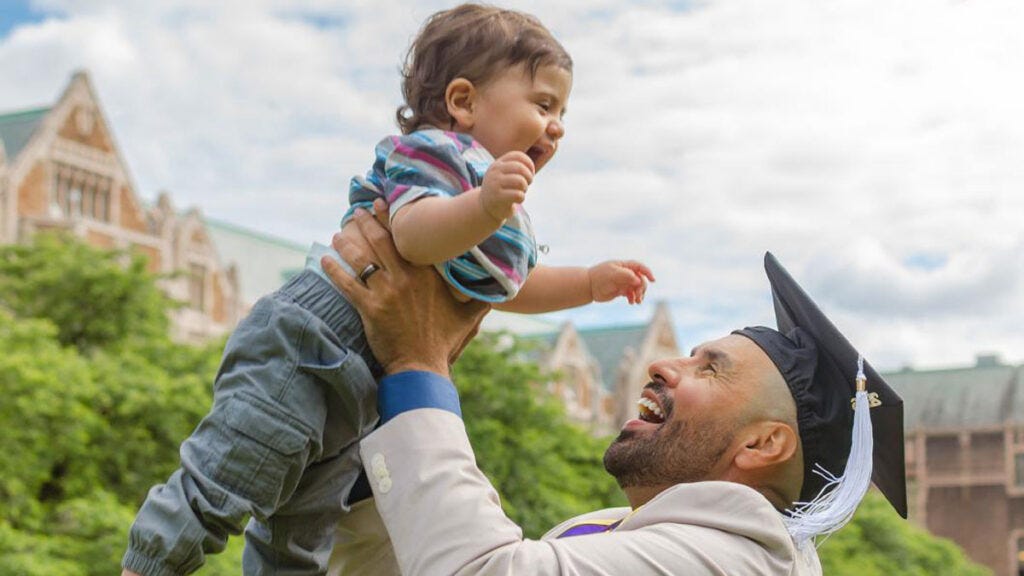
It is a small exchange, but it holds an entire family story. A child is watching her mother study, persist, and return to class. A mother is building a future while packing lunches, arranging childcare, finishing assignments, and getting everyone where they need to go.
Cece Santos of Generation Hope shared that moment in a recent Build a Brain conversation about student parents and the children growing alongside them. It is the kind of story that can be missed when we talk about college only in terms of credits, tuition, and graduation rates. For a student parent, education is rarely an individual journey. The whole family is traveling.
Student parents already have the drive
“Student parents don’t lack ambition. I think too often they’re navigating systems that were not designed for them.”
— Cece Santos, Generation Hope, 12:35
That sentence gets to the heart of the issue. A student can be ready for the academic work and still be pushed out by a daycare closure, a sick child, a car repair, a benefit interruption, or a class policy with no room for caregiving emergencies.
Generation Hope’s 2026 National and State Policy and Advocacy Agenda calls these moments stop-out triggers. They are the disruptions that force a parent to pause school, sometimes for a semester and sometimes much longer.
The agenda estimates that 3.8 million undergraduate students across the country are raising children. In Generation Hope’s winter 2025 survey of 98 Scholars, 75 percent reported some degree of food insecurity. More than one-third had faced housing insecurity in the previous month. Half had been unable to reach school, work, or another destination because they lacked transportation. Nearly half had faced an emergency expense that could have affected their ability to stay enrolled.
Those numbers describe Generation Hope’s Scholars, not every student parent. Still, they show why encouragement alone is not enough. A pep talk cannot reopen a closed daycare. It cannot restore a lost benefit, repair a car, or make an inflexible attendance rule bend.
“They need support. They don’t need judgment.”
— Ayanna Clay, Generation Hope, 29:35

Two people are learning
Generation Hope uses a two-generation approach, supporting a parent’s education and a child’s development at the same time. Scholars can receive help with tuition, enrollment, financial aid, food access, mental health, career planning, and other needs. Parents of young children can also set developmental goals, learn what to watch for, and prepare to advocate for their children at school.
The approach begins with a simple truth: the parent is already doing important work. Support should make that work more manageable and more intentional. It should not add a perfect-parent checklist to a schedule that is already full.
“You are your child’s first teacher. What do you want them to know?”
— Ayanna Clay, Generation Hope, 17:24
Ayanna described using the moments families already have. You are building your child’s brain by turning ordinary routines into micro-moments:
- In the car: Play “I Spy” or talk through the plan for the day.
- At the grocery store: Narrate your list and name colors or shapes.
- At bedtime: Sing a song or read a 5-minute story
That matters for a parent who worries that school and work leave too little time for enrichment. Learning is already happening inside ordinary family life. The goal is not to create more hours. It is to notice the possibilities inside the hours you have.
A practical plan for the next hard week
Student parents should not have to organize their way out of structural problems. A simple plan can, however, make available support easier to reach before a small disruption becomes a semester-ending crisis.
- Claim Your Status: Tell an advisor, success coach, or faculty member you’re a parent. Ask directly about emergency grants, childcare assistance, food pantries, priority registration, and family spaces.
- Map Your Safety Net: Create a single contacts page with your primary/backup childcare, academic advisor, financial aid office, healthcare providers, benefits caseworker, and an emergency contact.
- Archive Course Policies: Save every syllabus policy on absences, make-up work, remote participation, and incompletes before an emergency happens. Keep all communication in writing.
- Centralize Renewal Deadlines: Put financial aid, childcare subsidies, benefit renewals, registration dates, and school/daycare forms on a single master calendar with reminders.
- Protect One Connection Ritual: Keep a simple, predictable daily routine—like a special goodbye phrase, a song in the car, or a five-minute bedtime book—to anchor your child on tough days.
- Ask for Concrete Help: Reach out to family or friends with specific requests like a ride, a meal, a pickup, or an hour of study time so they know exactly how to support you.
What a real village looks like
The word village is easy to use and harder to build. Generation Hope’s model shows that useful support is coordinated. When a scholar brings a question to one staff member, the question does not end there simply because that person does not know the answer.
“A problem is never going to stop with one person.”
— Ayanna Clay, Generation Hope, 25:16
Colleges and communities can put that idea into practice:
- Ask student parents what they need before designing a program for them.
- Offer priority registration so class times can fit childcare and work schedules.
- Adopt family-inclusive attendance and make-up policies that preserve academic standards while recognizing caregiving emergencies.
- Connect financial aid, childcare, food, housing, mental health, and transportation support so a parent does not have to restart the story at every office.
- Provide emergency aid and paid career opportunities that account for the real costs of childcare and transportation.
- Keep help visible. A resource that exists but cannot be found, understood, or accessed in time is not functioning as support.
Friends and relatives can help in smaller, immediate ways. Ask what would make this week easier. Offer a specific block of childcare, bring dinner without expecting a visit, send a gas card, or check in after finals. Support should remove a task, not create another one for the parent to manage.
Some parenting questions cannot wait for office hours
Building a village takes time, but everyday questions don’t wait for office hours or doctor appointments. When you need quick, science-backed guidance on routines or developmental milestones at 10 PM after finishing a paper, tools like BabyBrain.ai fill the immediate gap.
You have questions. Buddy can help. Our newly released AI parent companion guides families to age-based, science-backed information for the years from birth to age three. Buddy can help you explore milestones, routines, everyday brain-building moments, and a practical next step when you are not sure what your child needs.
Buddy is especially useful for busy parents because it starts with the question in front of you. It can also guide you through the Build a Brain Project’s bite-sized lessons, parent community, and expert-led support. It is not a replacement for your child’s healthcare professional or emergency services. It is a reliable place to begin and a way to prepare the next question you may want to bring to a professional.

Check out Buddy and join the Build a Brain Project
Send good luck in both directions
The little girl who wished her mother good luck at school understood something important. She and her mother were both learning. They were both growing. Each one could encourage the other.
Student parents already bring ambition, knowledge of their families, and a powerful reason to persist. The rest of us can make sure persistence is not the only resource available to them. We can build systems that anticipate caregiving, communities that answer specific needs, and tools that make trustworthy guidance easier to reach.
A parent earning a degree should not have to choose between moving forward and being present for a child. With the right support, the family can move forward together.
Generation Hope. 2026 National and State Policy and Advocacy Agenda. March 2026.
Generation Hope conversation. Interview with Cece Santos and Ayanna Clay. Transcript quotations at 12:35, 17:24, 25:16, and 29:35.
Generation Hope. Student Parent Resources and Workshops. College-readiness, financial-aid, childcare, and time-management resources.
Build a Brain. For Parents. Information about Buddy, age-based learning paths, practical lessons, community support, and expert-led sessions.