
Understanding Your Toddler’s Developing Social World
It is a scene every parent knows too well: you are at a playdate or the park, and your two-year-old is happily zooming a toy car across the ground. Another child approaches, reaches for a nearby block, and suddenly your toddler lets out a piercing “MINE!” while scooping every available toy into a protective pile.
In that moment, it is easy to feel a rush of embarrassment. You might wonder, “Why won’t my child share?
Are they going to be a bully?
Do they need more time around other kids to learn how to be nice?”

The good news is that these behaviors – the possessiveness, the shouting, and even the tendency to play right next to a friend without ever actually speaking to them – are not signs of a “naughty” child. They are actually signs of a healthy, developing brain. In the world of developmental psychology, these are milestones as significant as a first step or a first word.
Why Won’t My Toddler Share? The Science of “Me”
The most important thing to understand about sharing is that it is a complex cognitive skill, not a simple personality trait. Research from the American Academy of Pediatrics (AAP) suggests that children younger than three years old generally cannot understand the abstract concept of sharing. In fact, the ability to intentionally share usually does not fully emerge until between 3.5 and 4 years of age.
To a toddler, “sharing” often feels like “losing.” If they give you their cracker, it is gone. They don’t yet have the “mental gymnastics” required to understand that the cracker will come back or that the other person feels happy when they receive it.
There are three main reasons why toddlers struggle with this:
- Language Barriers: Around 18 to 24 months, children are just beginning to use two- or three-word sentences. They simply lack the vocabulary to negotiate a deal like, “You can use the blue truck if I can have the red one”.
- The “Mine” Phase: This is a critical stage where children are finally realizing they are separate individuals from their parents. Developing a sense of ownership, stating “this is mine”, is a positive sign that they are building their own identity.
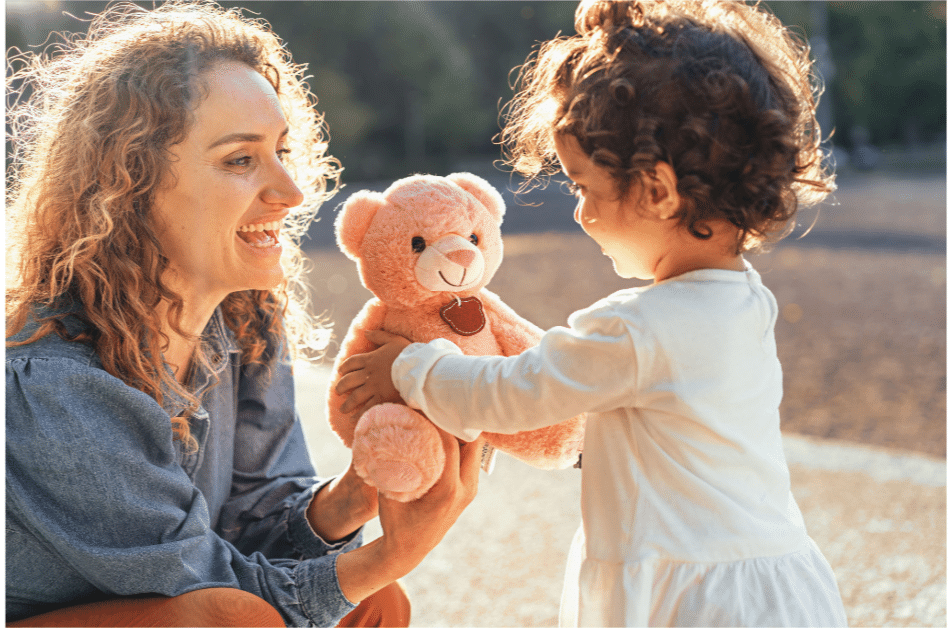
- Lack of Empathy: Developmental specialists explain that young children are still learning “perspective taking“. They literally believe that everyone sees, feels, and wants exactly what they do. If they love their teddy bear, they assume you love it too, but they cannot yet “step into your shoes” to understand your desire to hold it.
Is Parallel Play Normal?
If you take a group of two-year-olds and put them in a room with blocks, you will notice something fascinating: they will likely sit near each other, perhaps even using the same types of blocks, but they won’t build a tower together. They might not even look at each other.
This is called Parallel Play, and yes, it is completely normal and healthy for children aged 2 to 3.
The concept was first defined by researcher Mildred Parten in her 1932 study, “Social Participation among Preschool Children“. She identified it as one of the six essential stages of play. Think of parallel play as a “warm-up exercise” for the social world. Even though they aren’t interacting directly, they are incredibly observant.
The Secret Benefits of Side-by-Side Play
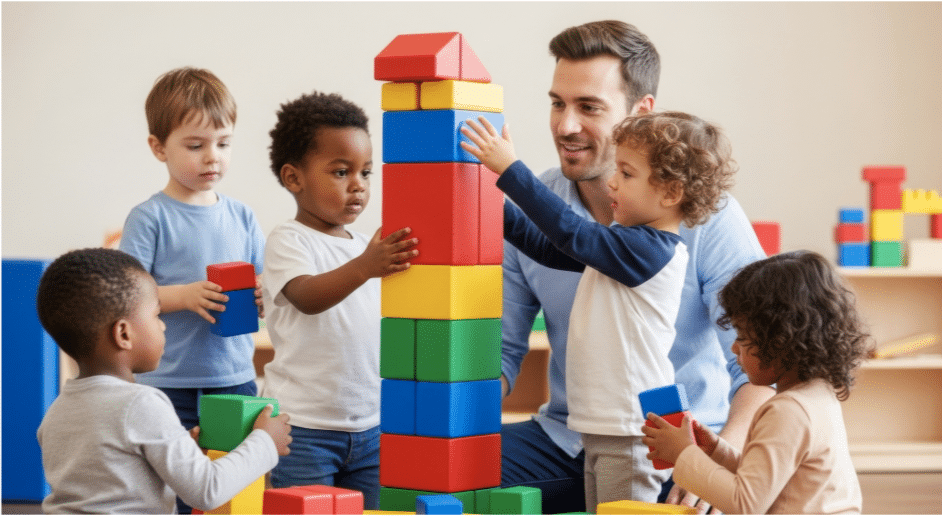
While it might look like they are ignoring each other, your toddler is actually working overtime during parallel play:
- Social Awareness: They are learning what it feels like to share an environment and respect personal space.
- Language Growth: They are listening to the words and tones used by the children and adults nearby, which helps grow their vocabulary.
- Imitation and Learning: By watching a peer, a toddler might learn a new way to solve a problem, like realizing that a block tower needs a wider base to stay up.
- Emotional Regulation: Playing near others helps them learn to manage frustrations and focus on their own tasks without constant adult intervention.
The Brain Under the Hood
The Limbic System and Executive Function
Why can’t we just explain the rules to them? The answer lies in how the brain develops. Children’s brains develop from the “back” (vision and sensory integration) to the “front” (the prefrontal cortex).
The Limbic System, which manages spontaneous emotional responses like fear and excitement, is active very early. However, the Prefrontal Cortex—the “air traffic control” system of the brain responsible for impulse control, planning, and self-regulation—undergoes massive growth between ages 3 and 5.
When a toddler grabs a toy, they are being driven by their limbic system. They see something they want, and their brain triggers an immediate “reward” response. They don’t yet have the “braking system” in the front of their brain to stop and think about the social consequences. This is why 90% of brain development happens before age five; we are literally building the physical pathways that will eventually allow them to regulate those big emotions.
How to Support Social Skills (Without forcing the issue)
Since we know toddlers aren’t biologically “wired” to share perfectly yet, our goal as parents isn’t to force compliance, but to “model” the behavior we want to see later.
- Change the Language: Instead of using the word “share,” which can feel like losing, try “taking turns”. This implies that the toy will eventually come back.
- Practice “Sportscasting”: When a conflict happens, narrate it without judgment. “Two children want the same truck! Sam, you had it first. Jade is waiting. Waiting is hard”. This helps them understand the situation and validates their feelings.
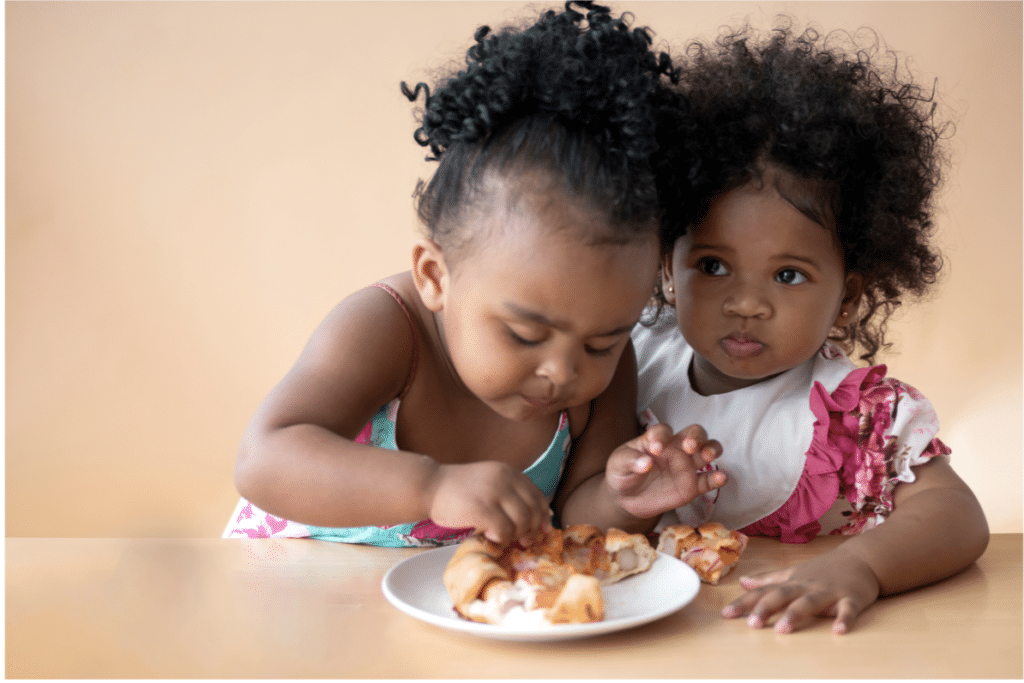
- Model with Food: Food is a great way to show sharing because it can be physically broken apart and given away in a way that feels natural. “Would you like some of my bagel? Let’s share it”.
- The “Long Turn” Strategy: It is okay to let a child play with a toy until they are actually finished. Forcing a child to give up a toy mid-play can actually make them more possessive because they never feel they have enough time to engage with it.
- Set Up “Screen-Free” Play Zones: The developing brain needs multisensory, real-world interactions for optimal growth. Interactions with screens can actually deprive the brain of the “serve and return” exchanges—like making eye contact or responding to a gesture—that build social brain pathways.
- Protect “Special” Toys: Before a playdate, ask your toddler if there are 2 or 3 special toys they don’t want anyone else to touch. Put those away in a closet. This gives them a sense of security and control over their “universe”.
Social skills are a marathon, not a sprint. Every “mine” today is a tiny step toward a “let’s play together” tomorrow.
Want to connect with other parents on the toddler journey? Join us: