
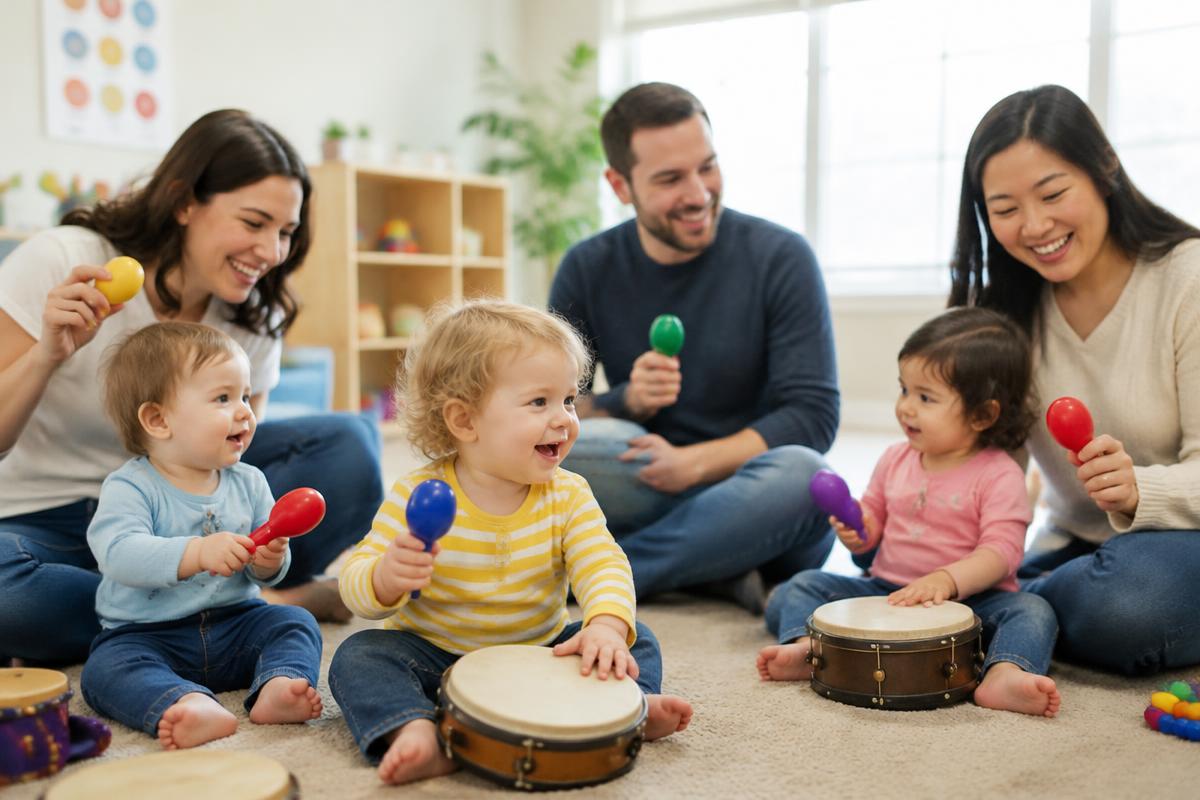
As a parent, you want to give your child the best possible start in life. You carefully choose the right foods, create safe spaces for them to explore, and celebrate every milestone. But did you know that one of the most powerful things you can do for your baby’s developing brain is something as simple and joyful as music?
Music isn’t just a fun extra—it’s actually a superpower for early brain development. Think of music learning classes like a full-body workout, but for your child’s brain. And the best part? Your little one will have so much fun, they won’t even know they’re learning!
The Magic Window: Your Baby’s First Three Years
Here’s something amazing: during your baby’s first three years, their brain is forming more than one million connections every single second. Yes, you read that right—every second! This is the most incredible period of brain growth your child will ever experience.
While you’re focused on when they’ll take their first steps or say their first words (and those are exciting!), there’s a whole symphony of development happening behind the scenes. By age three, 80-85% of your child’s brain architecture is already built. That’s the foundation for everything they’ll learn and do for the rest of their life.
Even more surprising: differences in reading readiness can show up as early as 18 months. That’s why what you do now—in these precious early years—matters so much
Why Music Is Brain Food
You might be wondering: what makes music so special? Science has the answer. When young children participate in music programs, they’re not just learning songs—they’re building critical brain connections that will help them with reading, math, emotional control, and so much more.
Here’s what music does for your child’s brain:
It Supercharges Language Skills
Music and language use the same pathways in the brain. When your baby learns to tell the difference between high and low sounds, or fast and slow rhythms, they’re actually practicing skills they’ll need to understand speech and eventually read. It’s like cross-training for their ears and brain!
It Teaches Self-Control
Have you ever watched a toddler try to stop moving when the music stops? That’s not just a game—it’s actually teaching them impulse control. Following a beat, waiting for their turn with an instrument, or knowing when to be quiet in a song all build the self-regulation skills they’ll need for school and life.
It Builds Math and Logic Skills
When children figure out how sounds fit together in patterns, they’re developing the same kind of thinking they’ll use for math later on. Understanding sequences, recognizing patterns, and thinking about how things relate to each other—music teaches all of this in a way that feels like play.
Why Classes Matter More Than Just Playing Music at Home
Now, playing music at home is wonderful—please keep doing that! But music learning classes like Kindermusik offer something different. Every activity is carefully designed by experts who understand how babies and toddlers learn best.
These programs use what scientists call “parentese”—that sing-song, higher-pitched way you naturally talk to your baby. (Yes, that baby talk you do? It’s actually really good for them!) Music classes take this natural instinct and add structure, rhythm, and repetition that make learning stick in your child’s memory.
Think of it this way: going for a walk is great exercise, but having a structured workout plan with a trainer gets better results. The same is true for your baby’s brain development.
What Your Child Gains from Music Classes
Better Reading Skills Down the Road
Music is like a secret weapon for future reading success. Here’s how:
- Singing nursery rhymes helps your child hear the different sounds in words—exactly what they’ll need when they start sounding out letters.
- Learning to hear subtle differences in music makes it easier to tell apart similar-sounding letters and words later on.
Stronger Emotional Intelligence
Music classes create beautiful opportunities for emotional growth:
- The back-and-forth of music activities—you clap, baby claps back—builds the foundation for all future communication and relationships.
- Music helps kids manage their emotions. A soothing lullaby can calm an upset baby, while an upbeat song can lift their spirits.
Physical Development
Music gets bodies moving in all the right ways:
- Grabbing instruments and doing finger plays builds the hand control they’ll need for writing someday.
- Dancing and moving to music develop balance, coordination, and strength.
Thinking Skills That Last a Lifetime
Music naturally teaches essential concepts:
- Recognizing patterns in music is the same skill needed for math—and music makes it fun!
- Learning about high-low, fast-slow, and loud-quiet through music helps kids understand comparisons and relationships.
It’s Not Just for Your Child—It’s for You Too!
Here’s the beautiful secret about music classes: they benefit you as a parent just as much as they benefit your child.
You’ll Feel More Confident
Let’s be honest—parenting can feel overwhelming sometimes. Music classes give you a roadmap. You’ll learn activities that work, and you’ll see other parents navigating the same journey. That’s incredibly reassuring.
You’ll Have More Ways to Connect
Ever feel like you’re running out of things to do with your baby? Music classes give you a toolkit of songs, rhymes, and activities you can use anytime—during diaper changes, in the car, at bedtime. These become your special moments together.
You’ll Find Your Community
Parenting can be isolating, especially in those early months. Music classes connect you with other families who get it. Those connections and friendships can be lifesavers, reducing your stress and giving your child a supportive community to grow up in.
You’ll Create Meaningful Routines
Children thrive on predictability. When you have special songs for cleanup time, bedtime, or getting in the car seat, life gets easier. Music gives you portable routines that help your child know what to expect and feel secure.
The Bottom Line: Don’t Wait
Many parents think, “We’ll start activities when they’re in preschool.” But here’s the thing: by the time your child reaches preschool, those crucial early years—when their brain is most flexible and ready to learn—are already behind them.
You don’t need to wait until your child can talk or walk to start music classes. In fact, the earlier you start, the better. Babies as young as newborns benefit from music, and formal programs can start as early as a few months old.
Music classes aren’t just about learning songs. They’re about giving your child’s brain the richest possible environment to grow, creating joyful memories together, and building a foundation for everything they’ll learn and become.
The science is clear. The window is open. And the best part? It doesn’t feel like work—it feels like play, laughter, and connection.
Your child’s brain is building itself right now, one million connections at a time. Why not make some of those connections through the joy of music?