
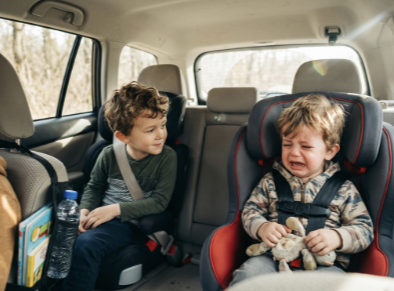
The car is packed. Your toddler has one shoe on. The baby needs to eat again, and a relative has just texted, “One missed nap won’t hurt!”
Holiday travel asks a lot of little kids and the adults carrying their snacks. It can also bring a dozen opinions about how you should be doing all of it.
Last week, we talked about the many people who help raise a child. This week, let’s get your family to those people safely, and talk about what to say when their ideas differ from yours.
The short answer
To make holiday travel easier with a baby or toddler, plan around safety, food, and sleep. Then share that plan with your hosts before you arrive.
Before you leave: check the car seat, or confirm that it is approved for flying.
On the way: keep your child buckled whenever the car is moving, and pack for delays.
When you arrive: set up a safe sleep space and check the home for hazards.
During the visit: protect the few routines your child relies on most.
With family: be warm, be brief, and offer another way to connect.
How do you prepare for holiday travel with a baby or toddler?
Start with the car seat or plane seat, then pack one bag you can reach without unloading anything.
Pack a grab-and-go bag
Diapers, wipes, and a changing pad
One or two changes of clothes, plus plastic bags for messes
Feeding supplies, snacks, and water
Any medicine your child needs, including an inhaler or epinephrine
A favorite book and a few familiar toys
Pajamas and the book or comfort item you use at bedtime
If you are driving
Check the car seat first. Make sure it fits your child’s age, height, and weight. NHTSA’s car seat finder and the AAP’s car seat checkup can help.
Skip the puffy coat in the seat. Bulky layers can leave the harness loose. Use thin layers and place a blanket over the buckled harness.
Stop for hands-on care. Pull over safely to feed, change, or comfort your child. Keep them buckled while the car is moving.
Bring an adult to the back seat if you can. It makes feeding, play, and naps easier.
Pack for getting stuck. Bring warm blankets, safety flashers, water, extra snacks, first-aid supplies, and a phone charger.
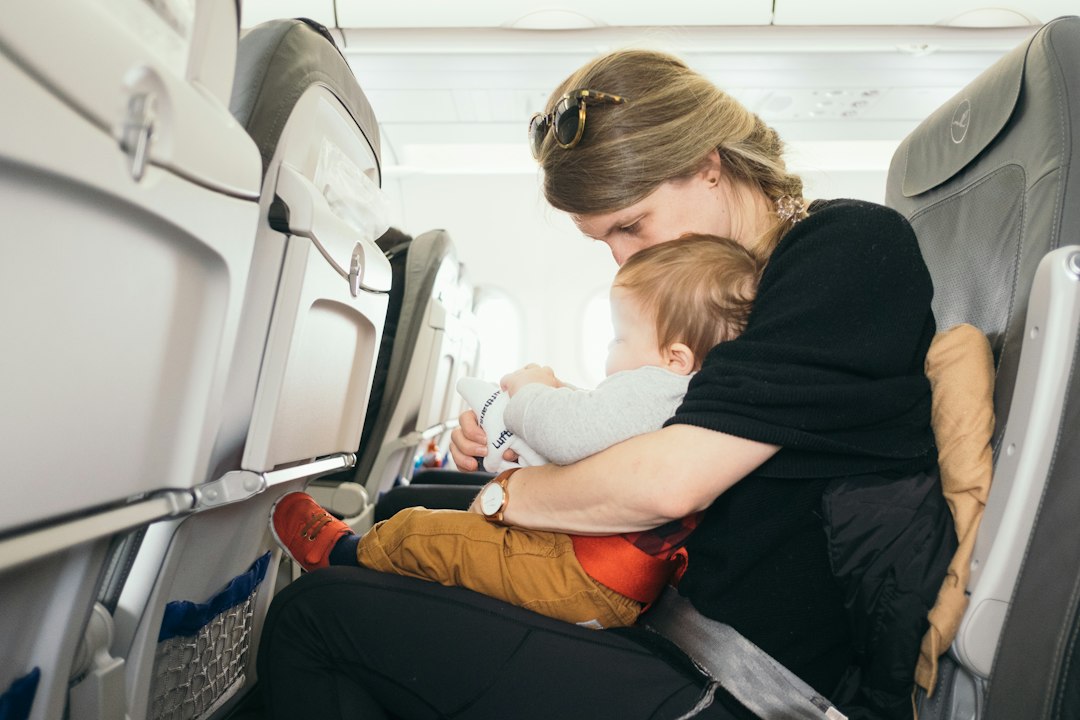
Photo by Paul Hanaoka on Unsplash
If you are flying
Give your child their own seat if you can. Airlines allow children under 2 to ride on a lap, but the FAA says an approved restraint is the safest place for them.
Check the car seat label. The AAP says to look for wording that it is certified for motor vehicles and aircraft. Not every seat is.
Know the harness limits. FAA-approved flight harnesses are not for infants. The AAP lists them for children weighing 22 to 44 pounds.
Choose the seat carefully. A rear-facing car seat belongs by the window. Aisle seats carry more risk from carts, hot drinks, and falling bags.
Board when families are invited. You will have time to install the seat.
Tell security about milk or formula. Breast milk, formula, and water for mixing can exceed the usual 3.4-ounce limit in reasonable amounts. Pack them separately.
Help with ear pressure. Nursing, a bottle, or a pacifier during takeoff and landing may help. If your child had an ear infection or ear surgery in the past 2 weeks, ask their doctor before flying.
Do not use medicine to make your child sleep. The AAP does not recommend Benadryl or Dramamine for this.
Let screens help if you need them. A little extra screen time on a flight won’t do serious harm, especially mixed with other activities.
How do you keep your child safe at someone else’s house?
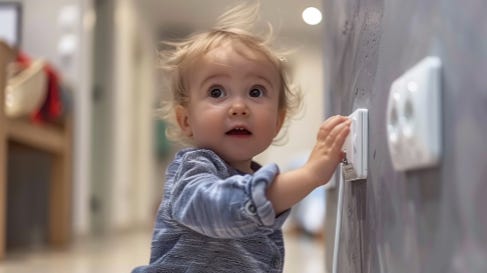
Set up sleep first, then take a quick walk through the space before your child starts exploring. Many homes are not childproofed, and that is easy to forget when you are tired from the trip.
Safe sleep away from home
These AAP safe sleep recommendations apply through your baby’s first year:
Place your baby on their back for every sleep.
Use a crib, bassinet, portable crib, or play yard that meets federal safety standards.
Keep the surface firm and flat, with only a fitted sheet.
Leave out pillows, quilts, blankets, toys, and bumpers.
Share a room, but not a bed.
If your baby falls asleep in the car seat, move them to a firm, flat sleep surface as soon as you can.
Dress your baby in about one more layer than you are wearing, and watch for overheating.
A couch or soft armchair is not a safe backup. The AAP says the risk of sleep-related death is up to 67 times higher when babies sleep there with someone. Bed sharing is also especially risky after alcohol, or with certain medicines or other substances, so plan the sleep space before the party starts.
For the reasons behind these recommendations, read our post, Safe Sleep for Real Life.
A 5-minute safety walk
Get down at your child’s level and look for:
Pills, vitamins, and purses or bags left within reach
Cleaning and laundry products in unlocked cabinets
Stairs without a barrier
Loose cords
Furniture or TVs that could tip
Small objects on the floor or under beds
Open bathrooms, tubs, and pools
Ask your host where medicines can go, then keep them up, away, and out of sight. Guests’ bags and coats need the same treatment.
In a hotel, use the deadbolt and keep the bathroom door closed. At a pool, stay within arm’s reach.

How do you protect naps and bedtime while traveling?
You do not need to keep the whole schedule. Choose the two or three routines that make the rest of the day easier, and let the others flex.
For many families, that means:
A chance to nap, even if it is shorter or happens somewhere new
Regular meals, even if your child eats before everyone else
The same short bedtime routine, such as pajamas, one book, and your usual song
There is good reason to keep those familiar pieces. A systematic review of 170 studies linked routines with positive outcomes in areas such as self-regulation and social-emotional skills. In a study of 10,085 children from birth through age 5, mothers reported better sleep when bedtime routines were more consistent.
These studies show links, not proof of cause. One late dinner will not undo your child’s routines. If the day goes sideways, go back to what is familiar at the next meal or bedtime.
If dinner is running late, feed your toddler first. They can rejoin the table for a few bites or a little time on your lap.
How do you set boundaries with family during the holidays?
A boundary is a clear statement of what your family will do. It does not depend on everyone agreeing with you.
The easiest boundaries are set early, before anyone is tired or hungry. Try this simple formula:
Warm opening + what your child needs + another way to connect
Decide with your partner or co-parent what matters most before you go. Agree on who will speak up, so neither of you is left guessing in the moment.
A message you can send before the trip
We’re so excited to see you! To help the visit go smoothly, we’ll bring a play yard and set it up when we arrive. She’ll need a nap after lunch, and we’ll head out by six. Could we take the family photo before then?
What to say when your child doesn’t want a hug
It is common for babies to become wary of unfamiliar people, and the AAP describes this as normal in later infancy. Your relative may feel like family to you and still feel new to your child.
The AAP also advises parents not to force or guilt children into hugs or kisses. A wave or high-five can be plenty.
“She’s getting comfortable. You can wave for now, and she’ll come over when she’s ready.”
A relative can help by sitting nearby, rolling a toy car, or reading a book while your child watches.
What to say about naps
“I know you want every minute with him. He does better with a nap, so we’ll step away after lunch. Want to read his book with us first?”
What to say when someone offers an unsafe sleep spot
“Thank you for making room for us. She’ll sleep in her play yard, so we’ll set that up first.”
What to say about food
“We’re sticking with foods she knows today. She’d love to sit with you while you eat.”
What to say when someone is sick
“We were looking forward to seeing you. Since you’re not feeling well, let’s skip the baby snuggles today and video chat instead.”
What to say when advice starts to feel like criticism
“I know you care about him. This is what works for our family.”
You can say it once, then change the subject. You do not owe anyone a debate.
What to say when it is time to leave
“We’ve loved being here. She’s done for the day, so we’re heading out. Thank you for having us.”
Someone may still feel disappointed, and you can let that be true. Clear plans reduce confusion, but they can’t guarantee that everyone will agree.
What should you do when your child is overwhelmed?
Move somewhere quieter, offer comfort, and check whether your child needs food or rest. A busy room can be a lot for a small nervous system.
Watch for signs such as turning away, clinging, going unusually quiet, or protesting.
Then be the thermostat. Lower your voice, slow down, and use just a few words:
“There’s a lot happening. Let’s take a break together.”
A familiar song can help, too. As we explored in Your Voice Is Enough, singing fits easily into ordinary moments of care.
If you lose your patience, come back and repair it:
“I got frustrated and shouted. I’m sorry. I’m here to help.”
One hard afternoon does not make the whole trip a failure.
Your holiday travel checklist
Answer these with the adults sharing the care:
Our priority: What matters most on this trip, and what can we skip?
Our ride: Is the car seat ready, or approved for the flight?
Our sleep space: Where will the baby sleep, and what do we need to bring?
Our routines: When will our child eat and rest? What will bedtime look like?
Our message: What do our hosts need to know before we arrive?
Our team: Who is watching our child at each point in the day?
Our break: Where can we go when things get loud?
Our exit: What time will we leave, and who will say so?
Holiday travel with kids: frequently asked questions
Can a baby sleep in a car seat after you arrive?
No. If your baby falls asleep in the car seat, the AAP says to move them to a firm sleep surface, on their back, as soon as possible.
Can a baby fly on your lap?
Airlines allow children under 2 to fly on an adult’s lap. However, the FAA says the safest place for them is an approved child restraint in their own seat.
Should you give a child Benadryl to sleep on a plane?
No. The AAP does not recommend using diphenhydramine (Benadryl) or dimenhydrinate (Dramamine) to make children sleep. Talk with your pediatrician about any medicine questions before you travel.
Do children have to hug relatives?
No. The AAP advises against forcing or guilting children into hugs or kisses. Your child can wave, give a high-five, or say hello from your arms.
How do you tell family your baby needs a nap?
Keep it warm and specific: “She needs a nap after lunch, so we’ll find a quiet spot. You can help read her book first.”
What if a relative ignores your boundary?
Step in calmly and repeat it once. Then move your child or change the activity. For safety issues, act first and explain later.
Let good enough be enough
The AAP’s Dr. Jennifer Shu offers a reminder worth packing: “there’s no ‘perfect’” when you travel with kids.
A shorter visit may leave room for one good story, a relaxed meal, or a child who finally feels ready to play. Let that count.
What is one boundary or travel tip that made the holidays easier for your family? Share it in the comments. Another parent may need it this week.
Ask Buddy for help with your plan
Visit The Build a Brain Project and ask Buddy, our AI Parent CogBot:
“Help me plan holiday travel with my two-year-old around meals, a nap, and bedtime. Include a quiet break and a kind message I can send our hosts.”
Buddy offers educational support. Please bring individual health, developmental, or safety concerns to your pediatrician or another appropriate professional.
Sources
American Academy of Pediatrics. Holiday Travel Safety Tips for Parents With Young Kids. Updated December 4, 2025.
American Academy of Pediatrics. Flying With Baby: Parent FAQs & Tips for Safer, Easier Air Travel. Updated March 3, 2026.
American Academy of Pediatrics. How to Keep Your Sleeping Baby Safe: AAP Policy Explained. Updated September 11, 2026.
Federal Aviation Administration. Flying with Children.
American Academy of Pediatrics. Medication Safety Tips for Families.
American Academy of Pediatrics. Emotional and Social Development: 8 to 12 Months.
American Academy of Pediatrics. 10 Tips for Parents to Teach Children About Body Safety and Boundaries.
Selman, S. B., and Dilworth-Bart, J. E. Routines and child development: A systematic review. Journal of Family Theory & Review. Published online December 19, 2023.
Mindell, J. A., Li, A. M., Sadeh, A., Kwon, R., and Goh, D. Y. T. Bedtime routines for young children: A dose-dependent association with sleep outcomes. Sleep, 2015;38(5):717-722. Parent-reported observational study, sponsored by Johnson & Johnson Consumer.