Build a Brain, Build a Life, Build a Community® partners with healthcare organizations and community agencies to help parents and caregivers understand the crucial role they play in early brain development. The mission is to inform, equip, and support early brain development — one child at a time.
Parents and caregivers are a child’s first teachers. Parent talk is a powerful, everyday resource, and every child deserves the opportunity to reach their full potential. Build a Brain turns those beliefs into a practical journey, introducing the science during the prenatal and birth experience. We send families home with useful tools and reinforce learning throughout the first three years.
Small everyday moments. A foundation for lifelong learning.
TalkReadSingPlay
02
The Why
The Critical Window
With 80-85% of a baby’s brain developing in the first 3 years of their life, OBs & hospitals play an important role in informing and equipping parents in their journey.
The Welcome Guide describes the first three years as a period of extraordinary neurological growth, with more than one million neural connections forming each second and approximately 80–85% of brain development occurring during The Why. Early experiences help shape the foundations of language, learning, emotional regulation, social connection, behavior, and health.
For healthcare partners, this is an opportunity to begin parent education before discharge. The goal is not to add pressure to new parents. It is to help them recognize that their voice, attention, and connection matter, and to make reliable education and community support easier to access from the beginning.
An extraordinary early window80–85%
of brain development in the first three years, as described in the Welcome Guide.
1 million+neural connections per second in the early years
Source: 2025 Welcome Guide. These are early-development estimates, not measured program results.
03
Research roots
A research-informed beginning in Pensacola
The program’s journey began in 2016, when Dr. Dana Suskind visited Pensacola to share her vision for an Early Learning City. From 2017–2019, Studer Community Institute partnered with the University of Chicago’s TMW Center for Early Learning and Public Health to study an early brain development video lesson with new mothers in a healthcare setting.
Peer reviewed and published, the Newborn Implementation Trial reached more than 1,300+ participating Pensacola mothers. Mothers from both lower- and higher-socioeconomic groups increased their knowledge of brain and language development. The findings supported the feasibility of incorporating video-based parent education into routine postpartum care.
These findings speak to parent knowledge and the practicality of the educational approach. They should not be read as proof of guaranteed developmental outcomes, reduced healthcare costs, or a specific return on investment for every participating organization.
From a shared vision to parent education
2016Dr. Dana Suskind visits Pensacola to share the Early Learning City vision.
2017–2019Studer Community Institute and the University of Chicago study video-based education in postpartum care.
1,300+Pensacola mothers participated in the peer-reviewed Newborn Implementation Trial.
Reported finding: increased knowledge across both socioeconomic groups. No numerical effect size was supplied.
04
The program
The core approach: three connected layers of support
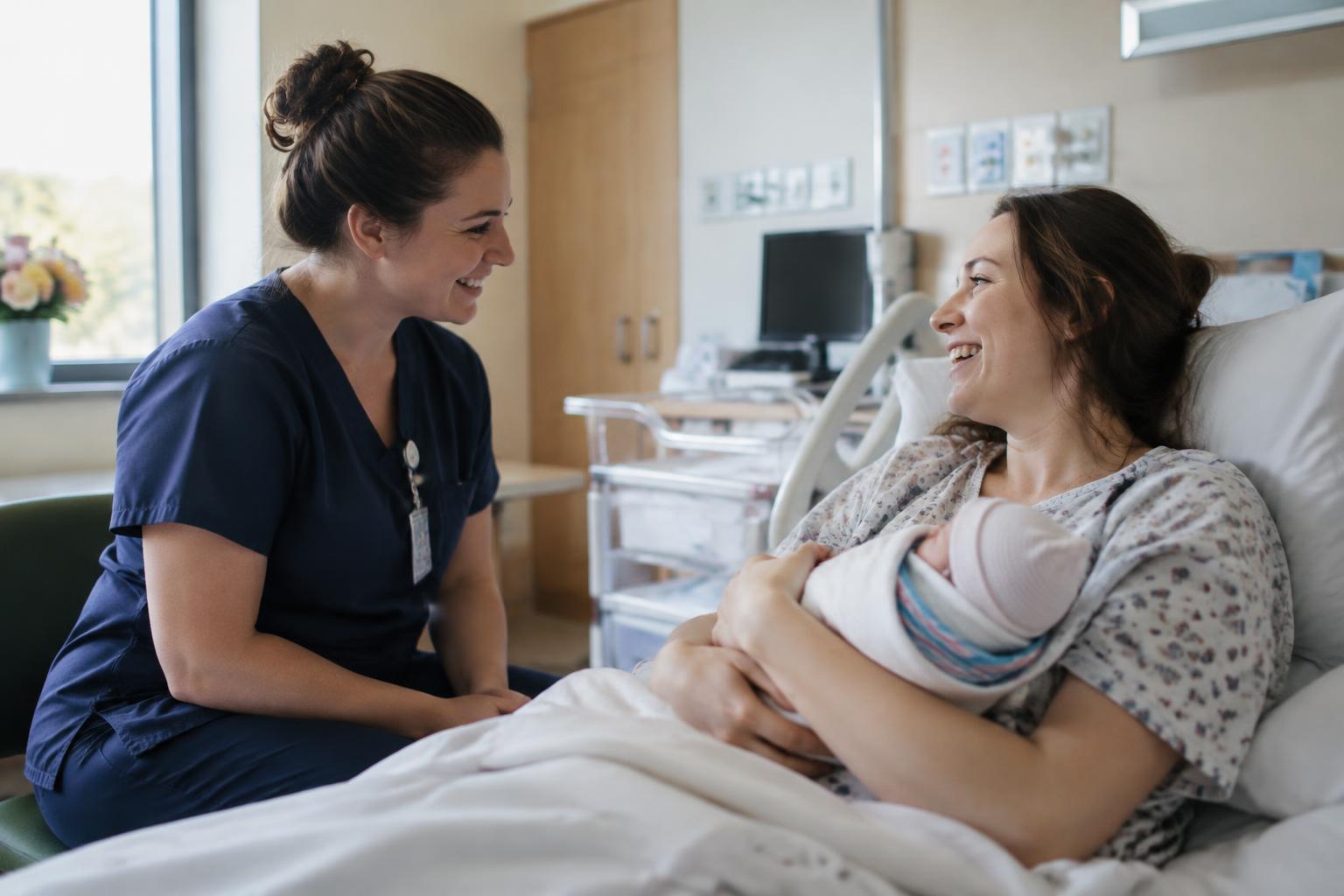
Inform families at the bedside. Equip them with resources and education to take back home. Support them as their child grows. Each layer reinforces the next, bridging the gap between knowing why early development matters and putting that knowledge into practice.
The program pathway
Three connected layers. One continuous journey.
Inform · at the bedsideConversation + video
Introduce early brain development and the everyday power of parent interaction.
Equip In HomeBaby Steps + resources
Send families home with a milestones book, practical tools, and local support information.
Support · as children growContinuing guidance
Reinforce learning through developmental newsletters and community connections.
Inform: start a conversation and share the video lesson
Care teams introduce the importance of early brain development and help parents see themselves as their child’s first teachers. The Build a Brain video translates early brain science into understandable, actionable moments that support bonding, learning, and emotional growth.
The Welcome Guide describes video education during healthcare visits as the first step. Teams are encouraged to talk about early brain development as often as possible and share the lesson. A conversation connects the information to the family’s everyday life rather than leaving it as another item in a discharge packet.
Equip: the Baby Steps milestones book
The Baby Steps milestones book is a practical guide to the first three years. Organized around age and developmental milestones, it helps parents, grandparents, and other caregivers find ways to talk, interact, and make learning part of daily life. Families can personalize the book and use it to track their child’s developmental journey.
The guide also reinforces the importance of well-child visits, discussing developmental concerns with a pediatrician, and timely screening and intervention when appropriate. The book supports family awareness and conversations with healthcare professionals; it does not replace professional assessment.
Equip: caregiver resource bags
Resource bags create a tangible connection between the healthcare system and community agencies. They can combine the Baby Steps book with local resource information and practical items such as diapers, wipes, or a thermometer. Other examples include a board book, a developmental toy, and a welcome card.
Contents can reflect the participating community and its partners. The purpose is to give families useful tools and clear next steps before they leave the facility — not simply a collection of promotional materials. Reading a board book together, naming objects, and exploring a simple toy become opportunities for interaction.
Support: developmental newsletters
Developmental newsletters extend education into the home throughout the first three years. They offer age-relevant suggestions for talking, singing, reading, and playing, explain what families may notice as their child grows.
Families receive a welcome message, milestone touchpoints at 2, 4, 6, 9, 12, 18, 24, and 30 months, and resources for continuing the learning journey at 36 months. Well-baby visit reminders appear at selected stages.
*Selected well-baby reminders in the program materials; not a complete pediatric visit schedule.
05
Continuing support
Additional support through the Build a Brain Project
The Naples Comprehensive Health summary describes the Build a Brain Project as a digital engagement platform that brings education, community support, and data-driven insights together for families from pregnancy through early childhood. It provides an additional place for learning and connection beyond the initial birth experience.
Customer success coaching
The summary also identifies personalized customer success coaching: expert guidance that helps caregivers apply evidence-based strategies, build confidence, and strengthen parent-child connection. For a healthcare partnership, coaching complements the educational resources by helping families translate information into everyday action.
A connected experience, not a one-time handout
Video education, the Baby Steps book, caregiver kits, ongoing messages, coaching, and the Build a Brain Project each serve a different purpose. Together, they offer a framework for keeping families informed, equipped, and supported as they move from healthcare to home and into the wider community.
06
Putting it into practice
Implementation: turn a shared mission into a practical pathway
The Welcome Guide’s implementation resources are designed to help healthcare teams organize the work, follow consistent steps, share best practices, and address common challenges. Research and supporting materials can also help teams explain the initiative to stakeholders and build support for funding.
1
1. Align the team and community partners
Identify the people who will introduce the program, share the video, distribute resources, and coordinate follow-up. Establish shared goals and connect healthcare staff with community agencies so families receive consistent information across settings.
2
2. Introduce education during the birth experience
Start a conversation about early brain development, share the video lesson, and incorporate the electronic survey into the agreed pathway. Use this moment to reinforce the role of everyday language and responsive interaction.
3
3. Make the transition home tangible
Provide the Baby Steps milestones book and partner-supported resource bag. Help families understand how to use the materials, where to find local support, and why developmental follow-up with their pediatrician matters.
4
4. Reinforce learning over time
Coordinate milestone newsletters and messaging, introduce ongoing learning and community resources, and maintain a clear connection between the information families received at discharge and the support available afterward.
5
5. Review the experience and share learning
Use surveys, implementation feedback, and engagement information to understand how families experience the program and where the pathway needs improvement. Share effective practices across the partner network rather than treating implementation as a one-time launch.
07
Community connection
Healthcare as a convener for community-wide support
Healthcare organizations can serve as conveners for early brain development within their communities. Connecting parents with local resources before discharge helps extend education beyond a single facility and brings more organizations into a shared commitment to children’s early years.
Community services can connect families with WIC, food assistance, housing assistance, and other local support. Libraries, early learning providers, schools, and early intervention services offer additional opportunities for learning and connection. Employers and businesses can support parents and make waiting areas and other everyday spaces more early-learning friendly.
Civic organizations, government agencies, and media can support public awareness, access to resources, and shared learning. Together, these partners help make brain-building interactions visible in the places where families already live, work, and spend time.
An early-development lens on community health
The materials connect early childhood support with education access and quality, healthcare access and quality, neighborhood and built environment, social and community context, and economic stability. Build a Brain does not replace services addressing those needs; it helps families connect with support while reinforcing their role in early development.
A shared commitment
Healthcare opens the door. Community keeps it open.
What partners can work toward — and what to measure
Our approach for moving from “knowing to doing” emphasizes informed caregivers, connection with community resources before discharge, continuing milestone education, well-child visits and developmental screenings, and early identification of concerns by pediatricians. These are shared goals for the partnership, not guaranteed outcomes.
A practical evaluation plan can distinguish program delivery from family engagement and longer-term outcomes. Teams can review whether education and materials reached families, what surveys show about parent knowledge, how families use continuing resources, and where connections to community support can improve.
The case for combined healthcare and community investment
The Naples Comprehensive Health summary highlights early engagement, increased caregiver education and confidence, a scalable model, and alignment with community health and foundation missions. It identifies potential reductions in long-term healthcare and education costs through early intervention — a possible benefit, not an established cost-saving promise for this program.
Investing together allows healthcare and community partners to reinforce the same message across the first three years: parents have a meaningful role, practical tools can help, and support should continue after families return home.
09
Team resources
Resources for your healthcare team
The Welcome Guide identifies six core implementation resources: the Implementation Guide, videos, an electronic survey, the Baby Steps milestones book, developmental milestone newsletters, and the Marketing & Media Guide. These materials support staff preparation, family education, continuing communication, and consistent program messaging.
Contact Build a Brain to discuss how the education pathway, caregiver resources, coaching, and continuing support could fit your organization and the community partners you serve.
Source documents
This overview draws on Build a Brain program materials (program history, research summary, implementation pathway, and community framework); Build a Brain | Naples Comprehensive Health — Executive Summary (program resources and investment considerations); and the 2025 Build a Brain Welcome Guide (mission, Inform–Equip–Support model, and team resources). Research findings and potential benefits are attributed to these materials rather than presented as independent guarantees.