
Why trust, consistent caregivers, and responsive relationships matter so much in the first three years.

Sep 14, 2026
Share
readtime: 7 minutes
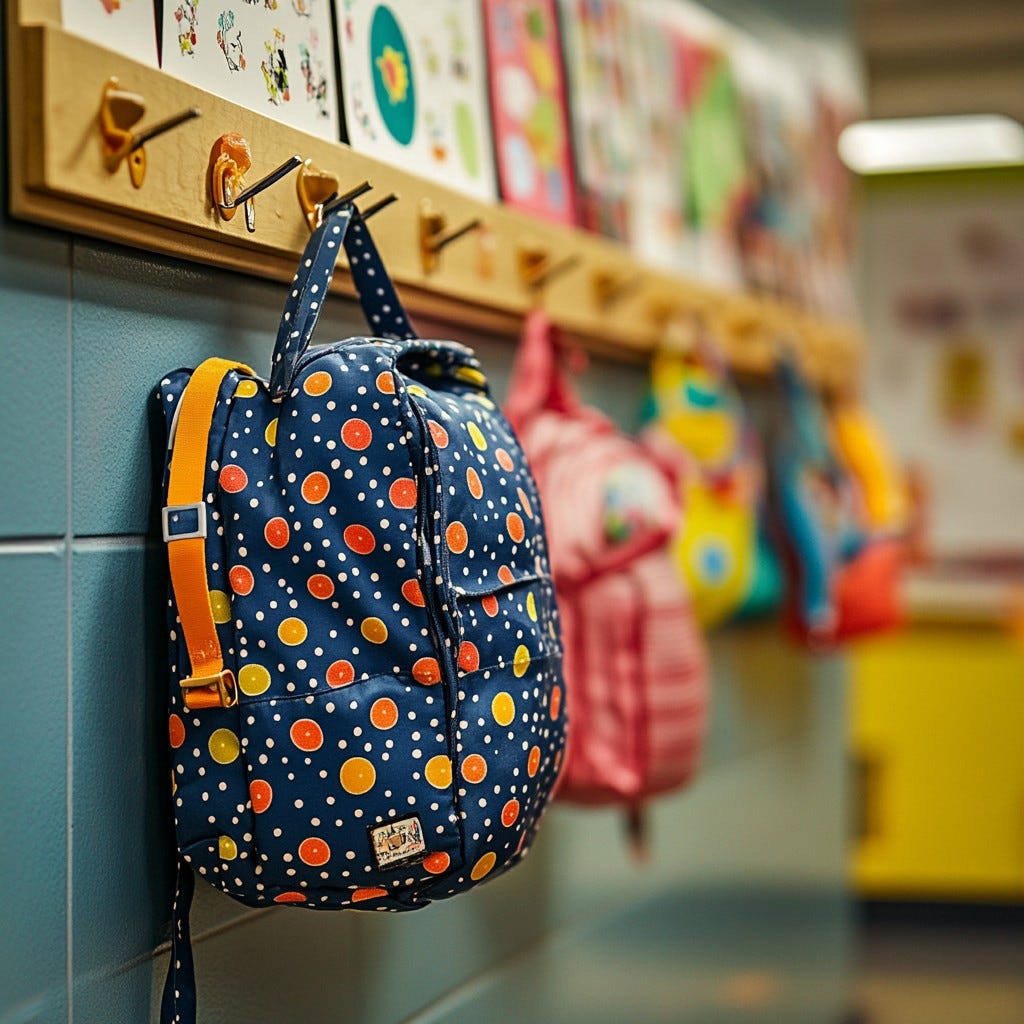
This time of year, tiny backpacks hang by the door, names are written on water bottles, extra clothes are tucked into cubbies, and parents practice saying, “I’ll be back after lunch.”
For some families, fall means the first day of preschool. For others, it means trying a Mother’s Morning Out program (also called Parents’ Morning Out or Mother’s Day Out) for a few hours each week. Whether your child will be away from you for three hours or a full workday, the questions underneath the decision are often the same:
Will my child be safe?
Will someone comfort them?
Will they be known here?
Can I trust these people with the person I love most?
Those are not overprotective questions. They are the right questions.
Why the first three years matter
Your baby’s brain is growing and changing at an incredible pace during the first three years of life. But that development isn’t happening through flashcards, worksheets, or formal lessons. It’s happening through relationships.
A caregiver responds to a baby’s babble. A toddler points, and an adult names what they see. A child falls and someone offers comfort. A teacher gets down at eye level, waits for a response, sings a song, or helps a frustrated toddler try again.
These everyday back-and-forth interactions are sometimes called “serve and return.” They may look simple, but they are helping young children build the connections they need for language, emotional regulation, social development, and learning. The Center on the Developing Child at Harvard University describes these responsive relationships as an important part of healthy brain development.
In other words: for babies and toddlers, care is learning.
That idea is at the heart of Dan Wuori’s book, The Daycare Myth: What We Get Wrong About Early Care and Education (and What We Should Do About It). Wuori challenges the idea that “care” and “education” are two separate things. For very young children, they are intertwined. Feeding, diapering, soothing, talking, singing, exploring, and playing aren’t interruptions to learning. They are how young children learn.
And research on childcare supports the importance of those everyday interactions.
One study followed more than 1,000 children who received care outside the home during their first three years. Researchers found that children who experienced more positive verbal interactions with their caregivers had stronger language skills at age three. Greater caregiver stability was also associated with stronger social skills in kindergarten.
A more recent study followed babies around age 18 months through their first two months of daycare and found that positive attachment behaviors toward their professional caregivers increased over time. For many children, the biggest changes happened during that first month.
That last finding is worth remembering when the first few drop-offs are hard: relationships take time to develop.
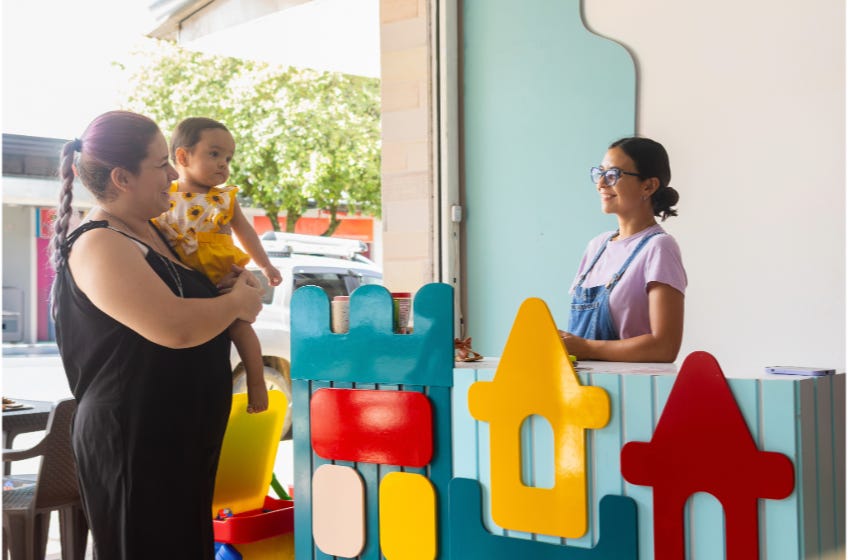
Your child may cry when you leave and still be forming a strong, trusting relationship with their caregiver. A difficult first week does not necessarily mean you made the wrong choice. It may simply mean your child is learning, “Who is this person? Will they come when I need them? Can I trust them?”
Why relationships matter in childcare
Trust isn’t a bonus. It is what allows a child to move from vigilance to exploration.
In a recent Day in the Life podcast conversation, mother of two Katy Peagler described her family’s relationship with their daycare this way:
“Our daycare has 100% become our family.”
For Katy, that isn’t just a nice sentiment. Her own family lives hours away, so the people caring for her boys have become an important part of the support system surrounding her family.
Michelle Gilbert, owner and director of The Children’s Academy, sees that relationship-building happens every day. As she explained in our conversation, “Even a little tiny baby, they know who people are and they get used to those people.”
And that familiarity matters. A young child doesn’t need every caregiver to respond in exactly the same way. But they do need adults who pay attention, learn their cues, and respond consistently. As Michelle put it, “We’ve got to figure out what works for…the child at hand.”
That’s really what we’re looking for when we talk about quality childcare.
Not simply a beautiful classroom.
Not simply a long list of activities.
Not simply a curriculum.
We’re looking for relationships.
People who know your child.
People who notice when something is different.
People who know how your child likes to be comforted.
People who can help your child feel safe enough to leave your side, explore, play, and learn.
So when you tour a childcare program, don’t just look at the toys, the classroom, or the curriculum. Look at the relationships.
12 questions to ask before enrolling
A tour can tell you a lot about a program, but it can also show you what a program wants you to see. These questions can help you look beyond the classroom and understand what everyday life will actually feel like for your child.
1. Are you licensed, and where can I review your inspection history?
Licensing is a safety baseline, but it doesn’t tell the whole story. Ask to see the current license and learn how to review inspection and complaint records.
2. What is the actual child-to-caregiver ratio throughout the day?
The more children each adult is responsible for, the harder it can be to provide individualized attention. Ask what the ratio looks like throughout the day, not just what the legal maximum is.
3. Who will be my child’s primary caregiver?
Young children build trust through consistent relationships. Ask whether your child will have a primary caregiver and who will step in when that person is absent.
4. How long have the teachers been here?
Teacher turnover can mean children have to repeatedly adjust to new caregivers. Ask about turnover in your child’s classroom and across the program.
5. How do you help a child through separation anxiety?
A thoughtful transition can help children learn that they can be upset and still feel safe. Ask what drop-off looks like and how caregivers comfort children after parents leave.
6. What do you do when a child cries, bites, hits, or becomes overwhelmed?
Challenging behavior is normal for young children; the adult response matters. Look for calm, developmentally appropriate strategies such as connection, redirection, and clear limits.
7. How do teachers talk and play with children?
Responsive interactions are a big part of how babies and toddlers learn. During your tour, watch whether teachers get down to children’s level, talk with them, respond to their cues, and join their play.
8. What does a typical day include?
Young children need opportunities for play, movement, exploration, conversation, and rest—not just structured activities. Ask how much of the day is child-led and how the program responds to individual needs.
9. How will we communicate about my child’s day?
Good communication helps parents stay connected and helps caregivers understand what works for your child. Ask what you’ll hear about meals, naps, mood, play, and anything unusual.
10. How do you notice and discuss developmental concerns?
Caregivers see children in many everyday situations and may notice patterns parents haven’t seen. Ask how observations are documented and how concerns are shared with families.
11. What are your safety, illness, and emergency procedures?
You want to know what happens when things don’t go according to plan. Ask about safe sleep, CPR and first aid, allergies, medication, emergency procedures, incident reports, and what happens when staffing is unexpectedly short.
12. How are families invited into the relationship?
Childcare works best when parents and caregivers work as partners. Ask whether parents can visit, how teachers learn about your child’s routines and temperament, and how the program responds to questions or concerns.
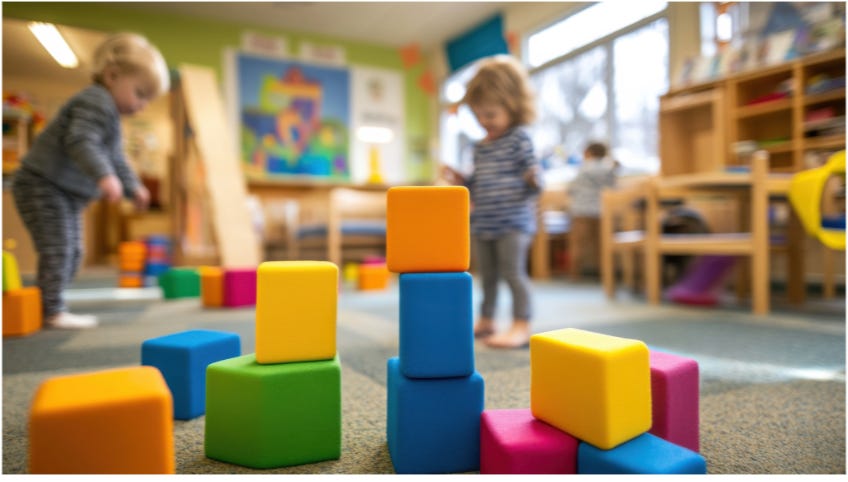
What should you notice on a childcare tour?
After asking your questions, stop talking for a moment and notice the room.
During your tour, look for:
☐ Caregivers know children’s names and signals.
☐ Children seek adults for comfort and help.
☐ Babies have opportunities to move and explore.
☐ Toddlers are offered appropriate choices.
☐ Adults get down to children’s eye level.
☐ There is laughter and warmth.
☐ Adults remain patient when behavior gets difficult.
☐ The classroom feels predictable without feeling rigid.
The fanciest building is not automatically the best program. A beautiful curriculum cannot compensate for adults who are unavailable, constantly changing, or stretched too thin to respond.
The strongest sign of quality may be quieter: a teacher who recognizes the beginning of a meltdown, kneels down, and knows exactly what helps this particular child return to calm.
For the First Day of Preschool, Keep the Goodbye Simple
If your child is starting preschool or a morning-out program this fall, expect some emotion for both of you. Before the first day, talk simply about what will happen, visit the classroom if possible, and practice short separations with a trusted adult.
At drop-off, keep your routine consistent: hug, phrase, handoff, go. Say goodbye, but try not to prolong the moment.
Your child can be sad and safe at the same time.
Give the relationship time to grow. Ask the teacher what happens after you leave, not just whether your child cries. Are they accepting comfort, beginning to play, exploring, or connecting with a caregiver? These small moments can be signs that trust is taking root.
The Question Beneath All the Other Questions
Cost, location, hours, and availability all matter when choosing childcare. But underneath the logistics is a bigger question:
Will the adults here build a relationship with my child?
The first years aren’t a waiting room for “real school.” Young children are learning through every moment.
Regardless of what your child’s care routine looks like, they deserve caregivers who know them, respond to them, and help them feel safe enough to learn.
Because in the early years, relationships are the foundation for everything that comes next.

Want to Build a Stronger Brain?
The good news is that you don’t need a special curriculum or expensive program to support your child’s development. Every conversation, cuddle, song, meal, and moment of play is an opportunity to build a brain.
The Build a Brain Project helps parents, caregivers, and communities understand the simple, everyday interactions that make a difference in a young child’s development.
Learn more about the Build a Brain Project and discover simple ways to build a stronger brain through everyday moments.
This Substack is reader-supported. To receive new posts and support our work, consider becoming a free or paid subscriber.Subscribed
Sources & Further Reading
Harvard Center on the Developing Child. Serve and Return. Explains how responsive back-and-forth interactions between children and caregivers support healthy development.
Wuori, Dan. The Daycare Myth. University of Toronto Press, 2023. Explores the relationship between caregiving and early learning.
Bratsch-Hines, M. E., et al. (2020). Research examining the relationship between early nonparental care, caregiver interactions, caregiver stability, and children’s later language and social development. PubMed
Macagno, F., & Molina, P. (2024). Research examining attachment behaviors between infants and professional caregivers during the early months of daycare. PubMed
American Academy of Pediatrics. Soothing Your Child’s Separation Anxiety. Practical guidance for parents navigating separation anxiety. HealthyChildren.org
ChildCare.gov. Choosing Quality Child Care. Consumer guidance for evaluating childcare programs. ChildCare.gov
Share