
For decades, the standard question asked about a child’s growth was a simple one: “Is this child developing normally?” It’s a question that invites a single answer — usually a percentile, an age-equivalent score, or a pass/fail on a checklist.
Increasingly, researchers and clinicians are asking a more useful question instead: “What are this child’s strengths, emerging skills, and areas that might benefit from support?”The answer to that question is a developmental profile. Profiles provide a fuller picture of a child’s abilities across several domains at once, rather than one number meant to sum up the whole child.
For infants and toddlers in particular, this shift matters. Development in the first three years is famously uneven and variable from child to child, which makes a single score a poor stand-in for the real, multidimensional story of how a child is growing.
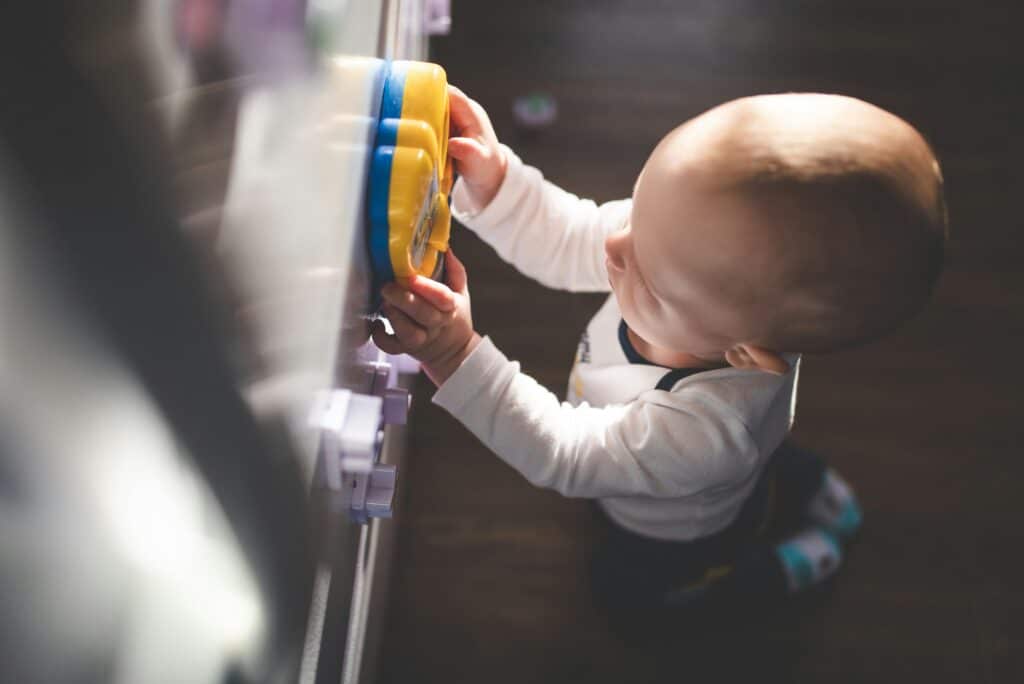
What goes into a developmental profile
Rather than collapsing everything into one developmental age, a profile tracks a child across several domains side by side:
| Domain | What it captures |
| Cognitive | Problem-solving, memory, object permanence, cause-and-effect |
| Language | Babbling, first words, receptive language, gestures |
| Motor | Rolling, crawling, walking, grasping, fine motor coordination |
| Social-emotional | Attachment, joint attention, emotional regulation, social engagement |
| Adaptive/self-help | Feeding, sleeping routines, dressing, daily living skills |
| Sensory processing | Responses to sound, touch, light, and movement |
A child can be advanced in one domain and need more support in another. Both of those things can be true of a perfectly typical developing child.

Why averages can hide as much as they reveal
Consider two hypothetical 24-month-olds. Child A has excellent motor skills, average language, and strong social engagement. Child B has a strong vocabulary, a mild motor delay, and some difficulty regulating emotions. On most single-score measures, both might land in a similar overall range — but they are different children with different needs.
This isn’t just a hypothetical concern. Large studies that statistically model children’s skills together, rather than one at a time, consistently find that development doesn’t cluster into a single “behind/on track/ahead” axis. A latent profile analysis of 5-year-olds using international assessment data found meaningful, distinct subgroups of children defined by combinations of cognitive and social-emotional skills — patterns that a single composite score would have flattened out. Similarly, researchers studying children in Early Head Start programs identified several distinct developmental profiles among 3-year-olds — including children who were generally well-adjusted and others with more specific behavioral or multi-domain difficulties — each associated with different early risk and protective factors.
How researchers actually build these profiles
Constructing a profile means pulling from more than one source of information. Modern studies commonly combine:
- Standardized developmental assessments
- Parent and caregiver questionnaires
- Direct observation of play and caregiver-child interaction
- Eye-tracking and other lab-based measures
- Wearable sensors that track movement, activity, or sleep
- Audio and video recordings of everyday routines
- Health records and, in some studies, biological or genetic data

The wearable and home-monitoring piece has expanded quickly. Because researchers can’t observe a child for every waking hour in a lab, several groups have built lightweight sensor systems that quantify things like infant movement and posture, or how much an infant is being held, directly in the home — work coming out of labs studying naturalistic motor development and caregiver-infant physical contact. A survey of nearly 400 caregivers found that families are generally open to this kind of in-home monitoring, especially when sensors — rather than continuous audio or video — are used to protect privacy. That openness is part of what’s making richer, everyday data collection feasible at scale.
At the population level, the NIH’s Environmental influences on Child Health Outcomes (ECHO) Program illustrates where this is heading: a longitudinal cohort that has followed well over 60,000 children and caregivers to examine how early exposures — biological, chemical, and psychosocial — relate to neurodevelopment and other outcomes over time, rather than at a single checkup.

From one-size-fits-all to personalized support
Perhaps the most consequential shift driven by developmental profiling is in how early intervention itself is designed. Historically, a toddler with a language delay might be funneled into the same standard program as every other toddler with a language delay, regardless of what else was going on for that child.
A profile-based approach asks more specific questions instead:
- Strong social communication paired with delayed expressive language might point toward a language-focused intervention.
- A language delay alongside sensory sensitivities might call for combined speech and occupational therapy.
- A language delay alongside high caregiver stress might call for child-focused intervention plus parent coaching.
This kind of tailoring is an active and still-developing area of research, particularly in autism intervention, where heterogeneity among children is the norm rather than the exception. A 2026 systematic review of parent-mediated early interventions for infants with elevated likelihood of autism notes that children in this group present widely varying symptom profiles, learning styles, and developmental trajectories — and the authors explicitly flag the need for more individualized approaches grounded in research that can translate into everyday clinical practice. Other researchers have proposed adaptive trial designs (sometimes called SMART designs) specifically because, as one review on personalizing autism intervention puts it, no single intervention works equally well for every child on the spectrum.
Where this research is headed
A few threads are particularly active right now:
- Early markers of later diagnoses. Researchers are looking for early profile patterns — combinations of social, motor, and attentional signs — that may precede later identification of autism, ADHD, or other developmental differences, often well before a formal diagnosis is typically made.
- Predicting longer-term outcomes. Which early combinations of strengths and needs best predict later language, learning, or social functioning?
- Everyday influences on development. How do sleep, nutrition, caregiver interaction styles, and family stress shape different developmental trajectories over time?
- Digital and remote data collection. Home videos, wearables, and app-based caregiver reporting are making it more feasible to study development as it actually unfolds in daily life, rather than only during brief clinic visits.

Much of this work is also longitudinal by design — following the same children over months or years — because a profile is most informative not as a single snapshot, but as a trajectory: how a child’s combination of strengths and needs shifts (or doesn’t) over time.
What this means for families and clinicians today
None of this replaces standard developmental monitoring. The CDC’s Learn the Signs. Act Early. program remains a well-validated, evidence-based way for caregivers and pediatricians to track milestones at routine well-child visits — and it’s estimated that about 1 in 6 children in the US has some form of developmental delay, disorder, or disability, which is exactly why ongoing monitoring matters. Developmental profiling builds on that same foundation; it doesn’t compete with it. The milestone checklist asks whether a child is on track. The developmental profile asks what that child’s particular mix of strengths and needs looks like — and increasingly, that second question is where researchers believe the most useful insights, and the most effective early support, will come from.
Further reading
- CDC: Developmental Monitoring and Screening
- NIH ECHO Program
- Identifying developmental profiles for children in Early Head Start (ScienceDirect)
- Latent profile analysis of early developmental skills, IELS 2018 (Springer)
- Parent-mediated early intervention in infants at elevated likelihood for autism: a systematic review (Frontiers, 2026)
- Caregiver attitudes toward in-home infant monitoring technologies (PLOS ONE)
Curious how a developmental profile — not just a single score — can reveal your child’s real strengths and needs?
Join the conversation in The Build-A-Brain Project on Skool and get your specific questions answered in real time (no waiting on a callback) with BabyBrain.ai.